🔒 The 1.8L Vault

Your Ultimate Resource for Building Power with the GM / Opel 1.8L & 1.6L Ecotec Engines

Why This page Exists

Your One-Stop Resource for Building a High-Performance 1.8L or 1.6L Ecotec Engine

Welcome to The 1.8L Vault—your all-access pass to building, modifying, and unlocking serious horsepower from the GM / Opel 1.8L and 1.6L Ecotec engine platforms.

Whether you're running an F18D4, A18XER, Z16LET, A16LET, or any variant found in cars like the Chevy Cruze, Sonic, Trax, Saturn Astra, Opel Mokka, Corsa, or Vauxhall Astra, this page was built to help you squeeze every ounce of performance out of your setup.

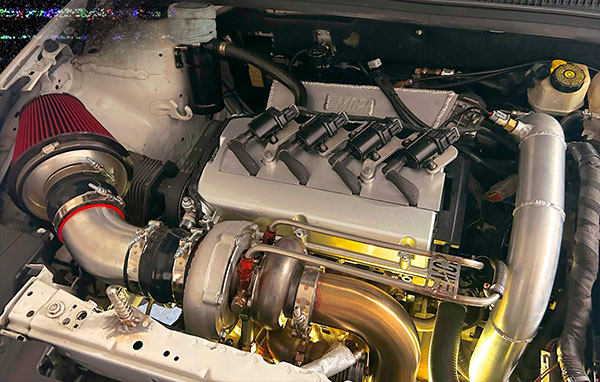
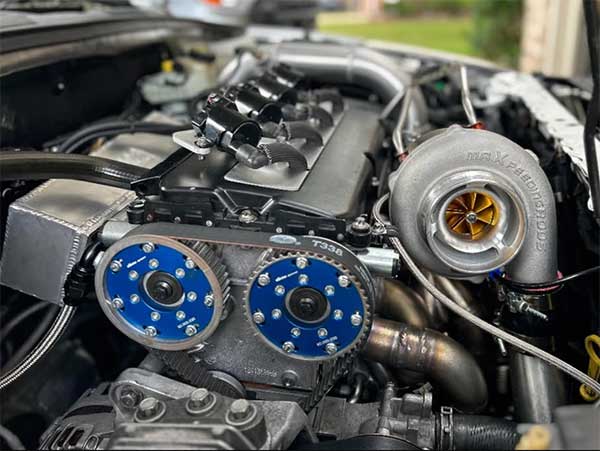
Over the past 5 years, I’ve been deep in the trenches—testing parts, blowing things up (so you don’t have to), and eventually building a 525+ WHP AWD Ecotec using a turbocharged 1.8L, custom fabrication, and a standalone ECU.

This vault is where I’m sharing everything I’ve learned:
🧠 The hard-to-find specs
🔧 The factory parts that secretly boost performance
📦 The aftermarket vendors that actually support these engines
🗺️ And the exact path I took to go from bone stock to built and boosted.


Inside The Vault:

✅ What vehicles came with the GM / Opel 1.8L & 1.6L Ecotec engines

✅ Factory performance upgrades (OEM swaps that work)

✅ Aftermarket rods, pistons, cams, valves & more

✅ ECU tuning tips, wiring quirks & sensor compatibility

✅ Torque specs, compression ratios & internal measurements

✅ Downloadable CAD templates (.dxf / .stl)

✅ How-to videos from my personal high-horsepower Ecotec builds


This is the resource I wish existed when I started. No fluff. No endless forum rabbit holes. Just real-world data, tested setups, and proven results.

Bookmark it. Share it. Build faster.

Why the 1.8L Ecotec Is a Sleeper Performance Engine

Don’t let the economy car badge fool you — the GM / Opel 1.8L Ecotec engine is an underrated platform with serious performance potential. With its mix of robust OEM engineering, surprising aftermarket support, and 2JZ-like architecture, it’s earned the nickname around here: “The Baby 2JZ.”

A Wolf in Sheep's Clothing

Don’t let the economy car badge fool you — the GM / Opel 1.8L Ecotec engine is an underrated platform with serious performance potential. With its mix of robust OEM engineering, surprising aftermarket support, and 2JZ-like architecture, it’s earned the nickname around here: “The Baby 2JZ.”

Here’s what makes it a great candidate for a budget build, track toy, or high-horsepower street sleeper:

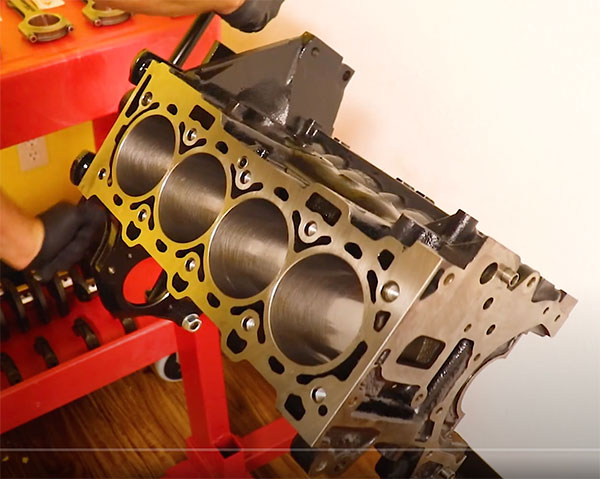
  • Gray Cast Iron Block with Semi-Closed Deck: Provides solid cylinder support in high-pressure zones, reducing the risk of cracking or ringland failure under boost.

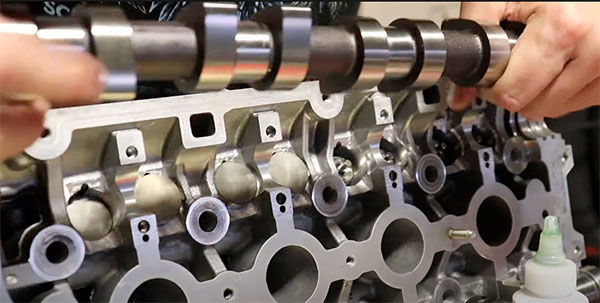
  • 2JZ-Inspired Valvetrain Architecture: Flat tappet cams with direct bucket-on-valve actuation — no rocker arms, no roller rockers. Less valvetrain mass = more RPM potential and fewer failure points.

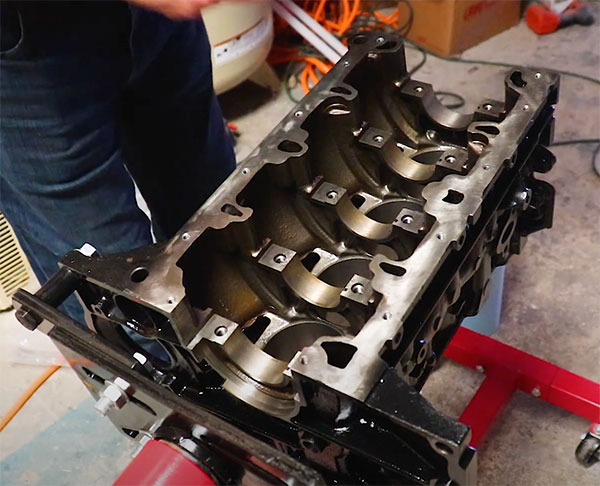
  • Extended Skirt Block Design: The block skirts drop past the main caps for added structural rigidity, minimizing crankshaft flex at high RPM.

  • Factory MLS Head Gasket: More boost-ready from the jump compared to typical composite gaskets.

  • Front Mount Oil Pump: A lot like a LS, the oil pump mounts off of the front of the crankshaft, and supplies 75 psi+ of oil pressure at idle.

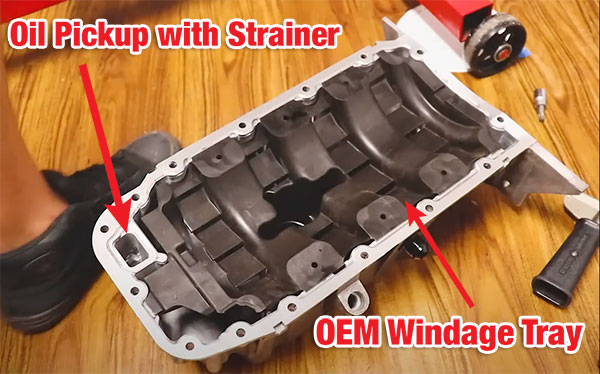
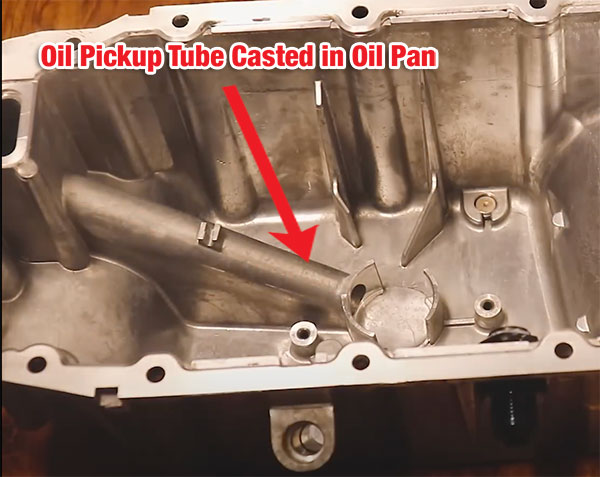
  • Cast Aluminum Oil Pan Support: Acts as a girdle, similar to a Honda K-series. Includes a bolt-in windage tray and a cast-in oil pickup, which reduces turbulence and maintains consistent oiling under G-forces — a smart OEM design rarely seen in econobox engines.

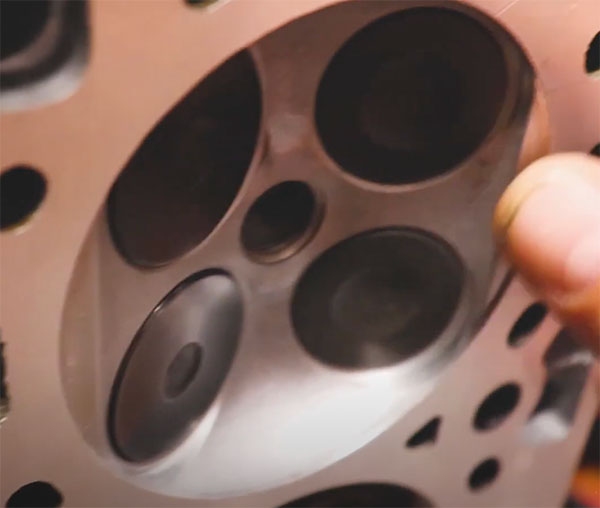
  • High-Flowing 4-Valve Pent-Roof Cylinder Head: Excellent stock flow with plenty of room for gains through porting or larger valves. Dual VVT versions offer even more flexibility.

  • Integrated Oil Cooler: Factory liquid-to-liquid oil cooler that helps stabilize temps on track without needing an external setup.

  • Dual VVT or Static Timing Options: Available in both configurations, depending on how much tuning or simplicity you prefer.

  • Widespread Availability: Found in tons of Cruze, Sonic, Astra, and Trax models. Cheap in junkyards and even cheaper as complete donor cars.

  • Proven Reliability: The 1.8L NA has a stronger reputation for reliability compared to the turbocharged 1.4L — which gives the Cruze platform a bad name. The 1.8L is the cockroach of the lineup — it just keeps running.

  • Factory Oil Squirters: Oil jets aimed at the underside of the pistons help manage heat and extend longevity (can be blocked off in race builds).

  • M32 Transmission Option: A decent 6-speed manual with a reputation for holding up to torque. LSD options like Wavetrac are available, and an AWD version exists in the UK (great for conversions if you’re crazy enough).

🧠 What to Watch Out For:

  • 2-Bolt Mains: Just like the B18 — but I’ve yet found the limit without block reinforcement. Even pushing 525 WHP.  At what power level will it have issues?  We’ll find out at some point
    .
  • Undersquare Design: More stroke than bore means great torque, but limited RPM ceiling without head and piston work.

  • Limited Overbore Potential: The 1.8L is nearly maxed out from the factory — don’t expect to bore it out much further.
1.8L Ecotec Cast Iron Block with Semi Closed-Deck
1.8L Ecotec Direct Cam on Bucket Design
The block skirts drop past the main caps
Oil Pickup Tube Casted in Oil Pan. OEM Windage Tray.
Oil Pickup Tube Casted in Oil Pan. Cast Baffles.
4 Valves Per Cylinder Pent-Roof Chamber

Compatible Cars with the 1.8L Ecotec?

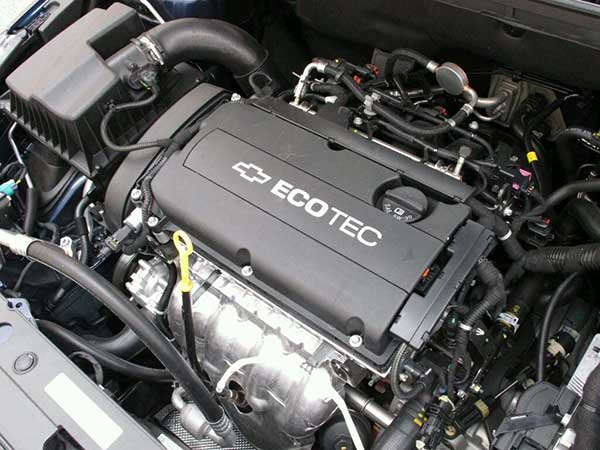
1.8L GM Ecotec Engine

Chevrolet

  • Chevrolet Cruze (2008–2016 – includes 2H0 and F18D4 variants)

  • Chevrolet Sonic (2012–2016 – F18D4 and 2H0 in North America)

  • Chevrolet Trax (2013–2018 – 1.8L F18D4/2H0, often AWD base models)

  • Chevrolet Orlando (2011–2014 – select global markets)

  • Chevrolet Optra (Asia/Latin America – 1.8L trims)

Saturn

  • Saturn Astra XR (2008–2009 – 1.8L Z18XER)
    (Rebadged Opel Astra H for the North American market)

Opel / Vauxhall

  • Opel Astra H & J (2007–2015 – Z18XER, A18XER)

  • Opel Zafira B (2007–2014)

  • Opel Insignia (2008–2013 – entry trim engines)

  • Opel Mokka (2012–2015 – 1.8L AWD variants)

  • Vauxhall Astra (H & J platforms)

  • Vauxhall Mokka

  • Vauxhall Zafira

Holden

  • Holden Cruze (2011–2016 – 1.8L variants)

Buick

  • Buick Verano (2012–2016 – 1.8L 2H0 engine, select trims)

Compatible Cars with the 1.6L Ecotec?

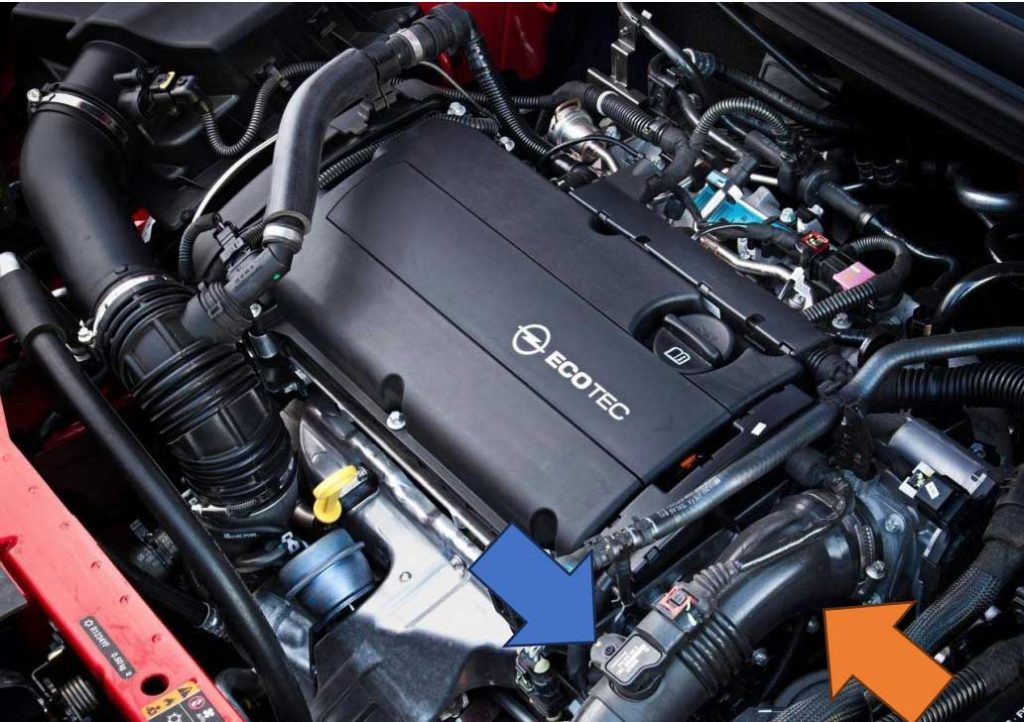
1.6L Opel Ecotec Factory Turbo Engine

Chevrolet

  • Chevrolet Cruze (2008–2016 – 1.6 NA and Turbo in global markets)

  • Chevrolet Sonic (2012–2016 – 1.6L trims, outside North America)

  • Chevrolet Trax (1.6L Turbo in select markets)

Opel / Vauxhall

  • Opel Astra H & J (1.6L NA Z16XER & Turbo Z16LET / A16LET)

  • Opel Zafira B (1.6L Turbo Z16LET)

  • Opel Insignia (1.6L Turbo)

  • Opel Corsa D / E (1.6L Turbo OPC / VXR)

  • Opel Mokka (1.6L NA & Turbo variants)

  • Vauxhall Astra, Corsa, Zafira (equivalent platforms)

Holden

  • Holden Astra (1.6L Turbo variants)

📌 Note for Builders & Tuners:

The GM / Opel 1.8L Ecotec engine family—including the 2H0, F18D4, A18XER, and Z18XER—shares many internal components and design principles with the 1.6L variants. This makes cross-platform upgrades possible, especially when combining OEM+ performance swaps and aftermarket internals.

OEM Performance Upgrades (Factory Parts That Make a Difference)

The GM / Opel 1.8L Ecotec engine family—including the 2H0, F18D4, A18XER, and Z18XER—shares many internal components and design principles with the 1.6L variants. This makes cross-platform upgrades possible, especially when combining OEM+ performance swaps and aftermarket internals.If you’re running a naturally aspirated 1.8L Ecotec (F18D4, A18XER, 2H0), you don’t have to go full aftermarket to start squeezing out more power. GM and Opel left behind a breadcrumb trail of factory performance parts—most commonly found on their 1.6L Turbo Ecotec variants (Z16LET, A16LET)—that can be swapped over for noticeable gains in flow, boost potential, and reliability.

Here are some of the most effective OEM+ upgrades for the 1.8L crowd:

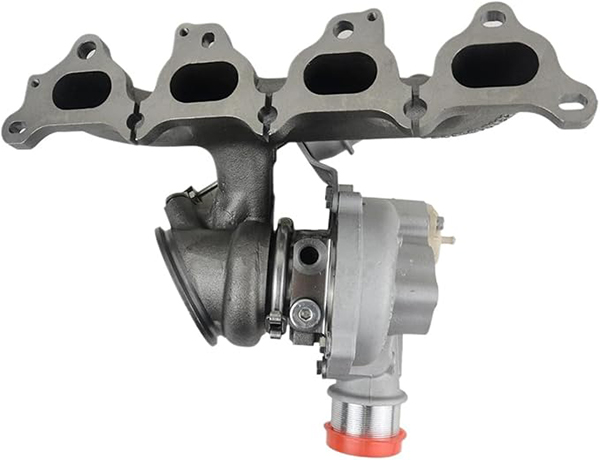
🌀 OEM Turbo System (Z03 / Z16LET)

  • Turbo: BorgWarner K03 (often labeled Z03 in GM systems)

  • Manifold: Cast iron log-style turbo manifold (built-in wastegate flange)

  • Source: Opel Corsa OPC / Astra 1.6T / Z16LET donor cars

  • Benefits: Factory-reliable boost setup for N/A-to-turbo conversions. Flows decently up to ~220-250 WHP before becoming a bottleneck.

🛢️ Turbo Oil Cooler Assembly + Bottom-Mount Filter

  • Source: Z16LET / A16LET

  • Why It’s an Upgrade:

    • Built-in turbo oil feed port

    • Compact design keeps things clean

    • Bottom-mount spin-on oil filter vs. top-mount cartridge (easier access for race bays)

  • Ideal for factory turbo conversions or just cleaning up the oiling system for high performance applications

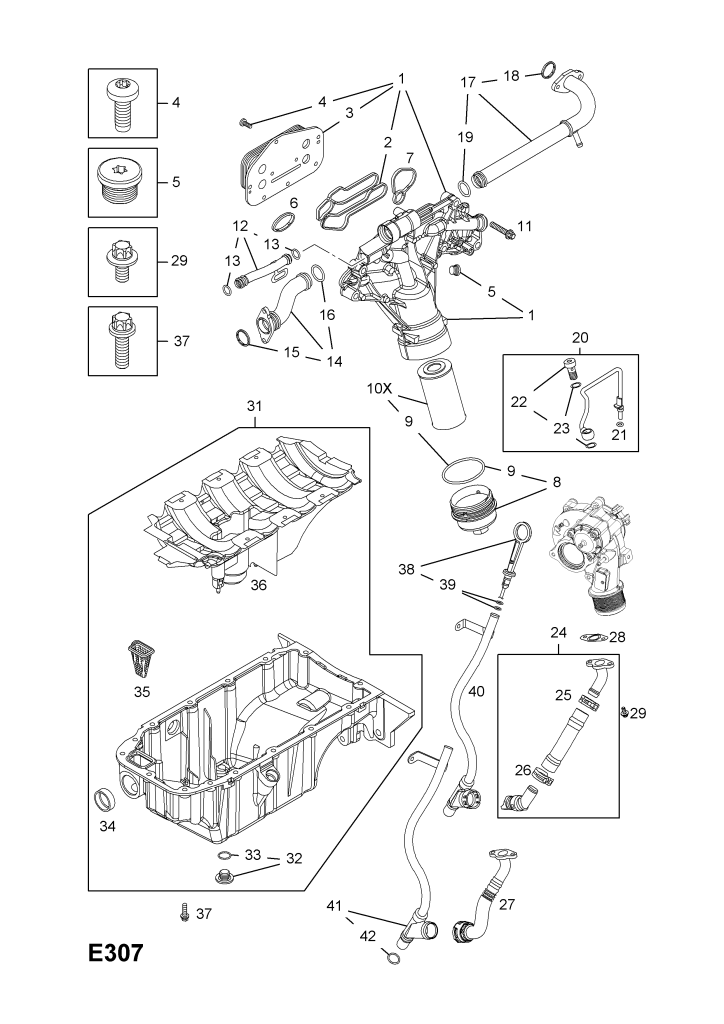
  • Oil Cooler / Filter Housing  Part # 55582569 or 55355699

  • Dip Stick Part # 55565719

  • Oil Return Pipe Part # 55574129

  • Oil Feed Line Part # 55583647

Z16LET / A16LET OEM Turbo Oil Feed and Drain Diagram

🧰 Mechanical Flat Tappet Valvetrain (A16LET / Z16LET)

  • Type: Mechanical bucket lifters with flat tappets

  • Source: Turbo 1.6L Ecotecs (A16LET, Z16LET)

  • Why It’s an Upgrade: More aggressive cam profiles possible, better control at high RPM.

  • Note: Swapping from the hydraulic lifter setup (2H0, A18XER, F18D4) requires full head swap, but a solid path for race builds.

🫁 Non-VIM Intake Manifold (A16LET / Z16LET)

  • Type: Fixed-runner aluminum manifold without Variable Intake Manifold (VIM) flaps

  • Source: Opel Astra / Insignia with A16LET engines. 

  • Part # 55565246

  • Benefits: Improved airflow in the upper RPM range. Simplifies the intake path, removes VIM actuator & wiring headaches.

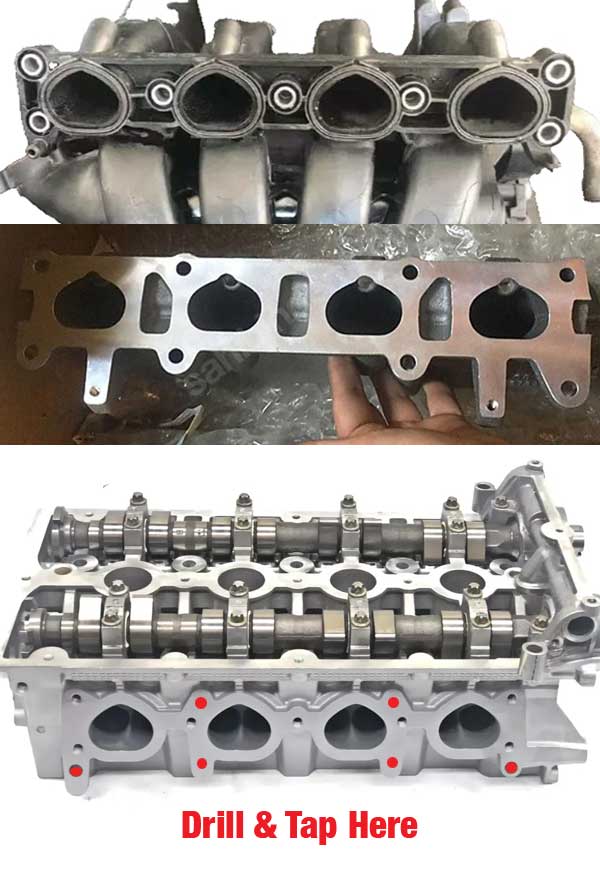
  • Note: Intake pattern slightly different. Will require drilling and tapping cylinder head.  Provisions casted into cylinder from the factory to accommodate both patterns.

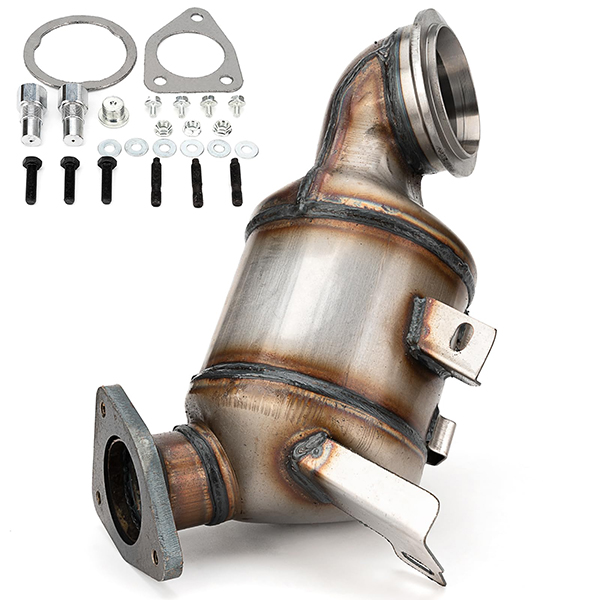
🌬️ Turbo Downpipe (LUV / A16LET)

  • Fits: Stock OEM fitment.  Source from 1.4T Cruze / Sonic or Astra VXR 1.6T.  May require minor fab, works with the Z03 turbo/manifold setup

  • Benefits: Factory-fitment dimensions, opens the door to bolt-on 2.5″ or 3″ custom exhaust systems

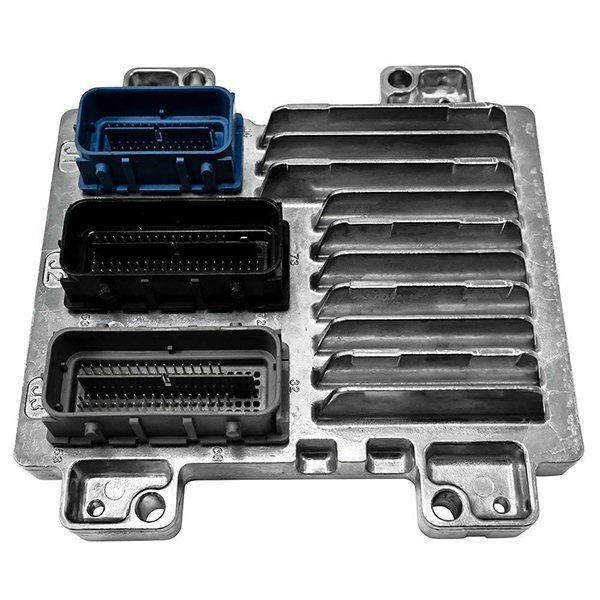
🧠 MAP Sensors + ECU Reflash Compatibility

  • Upgraded MAP sensors from the 1.4T family support boost

  • Compatible ECUs (from A16LET/Z16LET) can be adapted or cloned for custom tuning with HP Tuners or other standalone systems

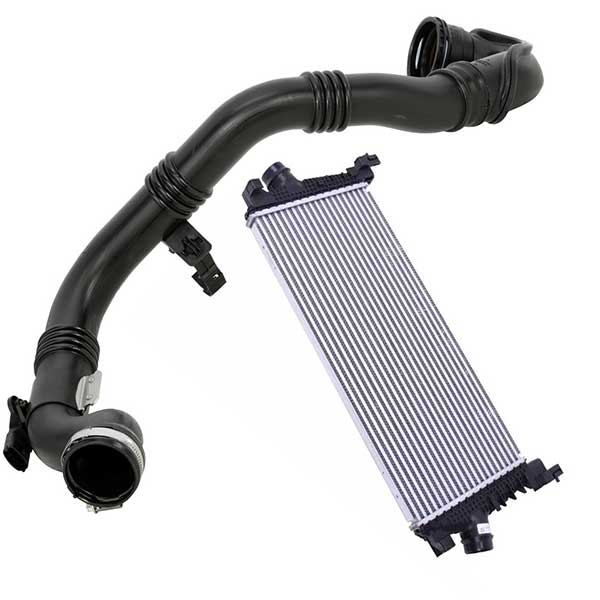
💨 Intercooler + Charge Piping

  • Source: Chevy Cruze / Sonic 1.4, Opel Mokka, Astra, and Corsa 1.6T

  • Why it matters: If you’re adding boost to your N/A block, these OEM charge components are built to handle mild pressure and make for a clean bay setup.

⚠️ Important Notes

  • The N/A 1.8L Ecotec’s pistons are not designed for big boost. Ringland failure becomes a risk past 8–10 PSI without gapping the rings for boost.

  • Stock rods and crank can handle up to ~250 WHP with proper tuning and fueling.

  • Boost upgrades should always be paired with tuning, fueling, and monitoring (wideband, knock detection, etc.)

🏁 Aftermarket Parts Vendors (Proven Performance Support for Ecotec Builds)

When you’re ready to move beyond bolt-ons and into boosted, high-revving, or track-duty territory, you’ll need more than just OEM scraps. The good news? There’s a small but mighty aftermarket for the 1.8L and 1.6L Ecotec engines, especially if you know where to look.

Below is a curated list of aftermarket vendors and part options that support these platforms. These are the companies and components trusted by serious builders—myself included—on the road to 500+ WHP.

🔩 Rods & Pistons

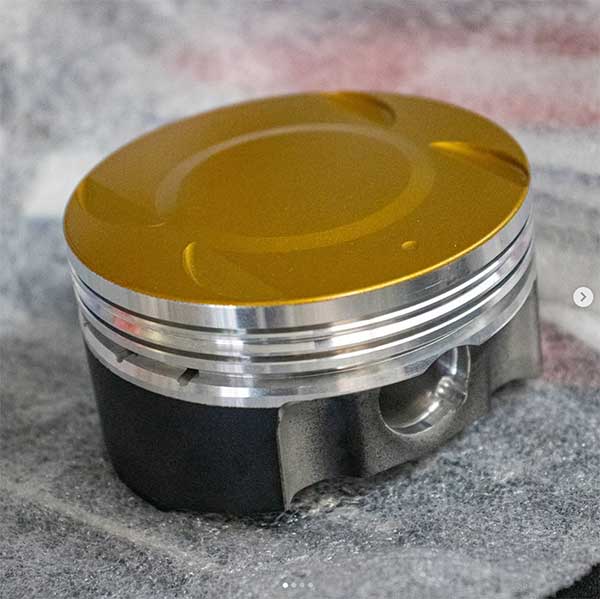
📍 JE Pistons & Wiseco

  • What they offer: Forged pistons for 1.6L Ecotec (Wiseco) and custom pistons from JE Pistons for the 1.8L. Call JE Pistons and ask for the 1.8L Cruze Ecotec Pistons they have on file, but are not off the shelf units. Maybe one day they’ll have an off the shelf offering if this platform get popular enough.

  • Why it matters: Designed for boost, detonation resistance, tighter tolerances

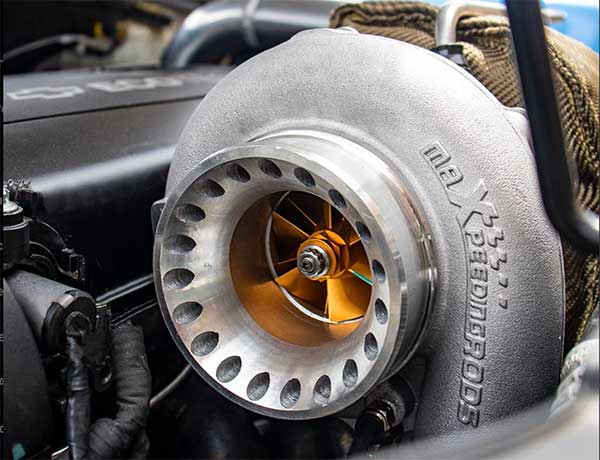
📍 Maxpeedingrods & Kingtec Forged Rods

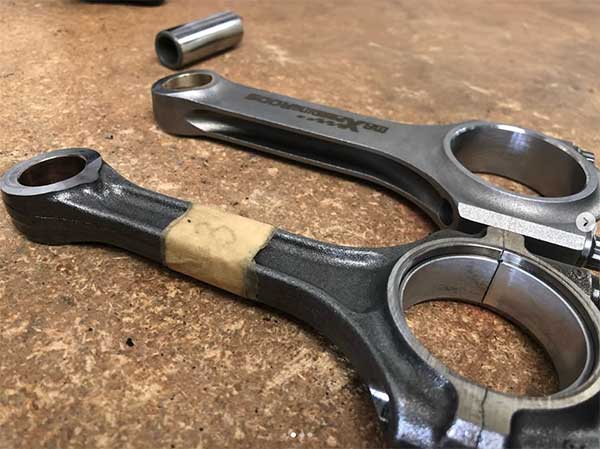
  • What they offer: H-beam and I-beam forged connecting rods. I’ve used both with success.
    Kingtec Link
    Maxpeedingrods Link

  • Fitment note: Be mindful of rod length and wrist pin diameter (varies slightly between Z16LET, F18D4, and 2H0). Look for a 19mm wrist pin size for the Chevy Ecotec.

Custom JE Forged Piston for the 1.8L
Side by side of Stock Rods vs Maxpeedingrods Forged H Beam Rods
Side by side of Stock Rods vs Maxpeedingrods

🧠 Cams, Springs & Valvetrain

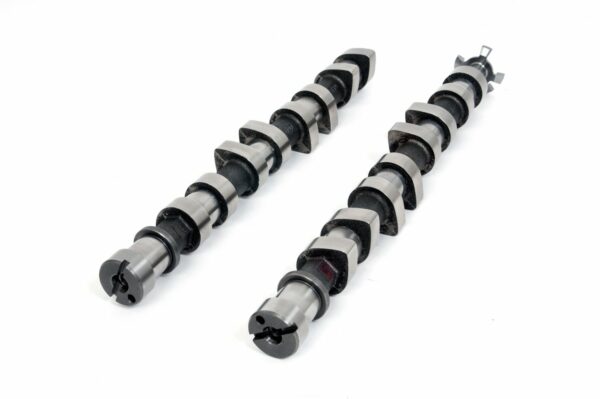
📍 Piper Cams (UK)

  • What they offer: High-lift camshafts for Z16LET, A16LET

  • Use case: Ideal for mechanical flat tappet heads / conversions without VVT.

  • Website: pipercams.co.uk

📍 Crower Cams (US)

  • What they offer: Camshaft regrinding services for more duration and lift.

  • Use case: Ideal for hydraulic cams that retain VVT. Call for ordering directions.

  • Website: crower.com

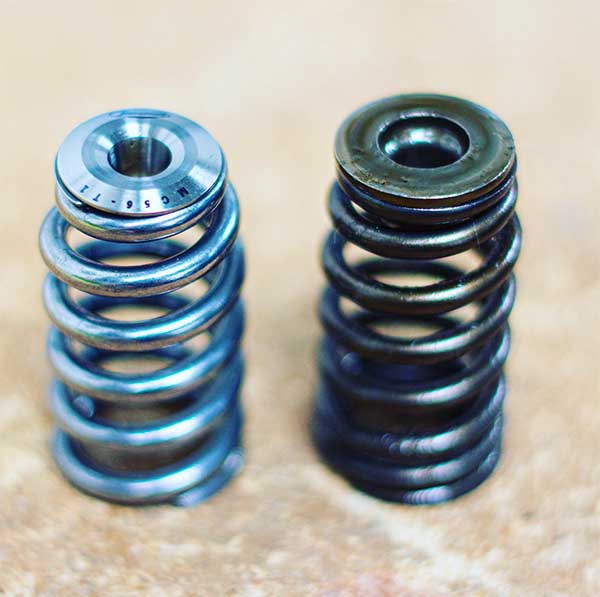
📍 Supertech

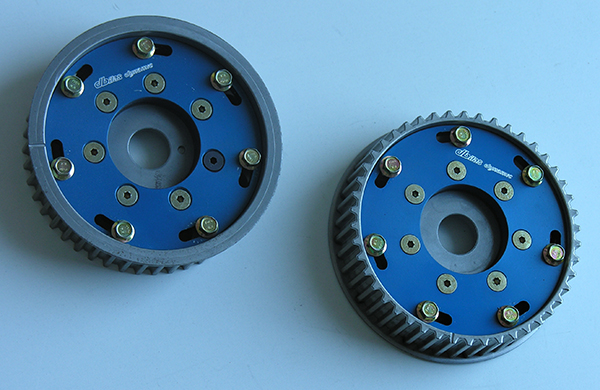
📍 Dbilas (Germany)

  • What they offer: Adjustable cam timing gears.

  • Use case: Ideal for mechanical flat tappet heads / conversions without VVT.

  • Website: dbilas.com

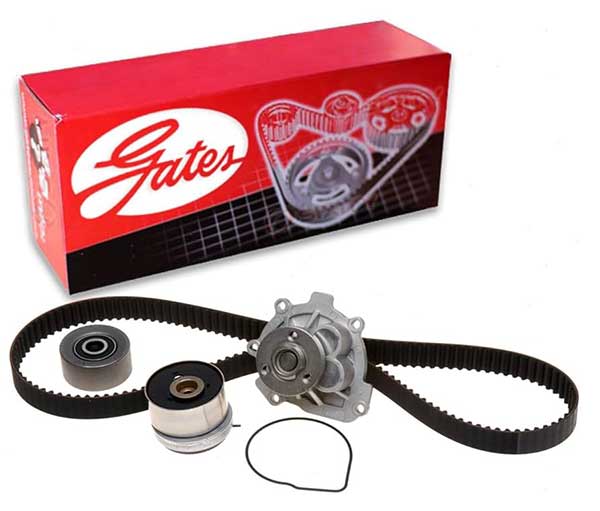
📍 Gates (US)

  • What they offer: Timing belts.

  • Use case: The only timing belt I’ve used that hasn’t come apart at 8,200 RPM. Period.

  • Website: Amazon.com

Piper VXR Camshafts
Side by side of Supertech Beehive Spring vs Stock
Dbilas Adjustable Cam Timing Gears
Gates - The Only Timing Belt I Trust

🚀 Turbo Kits & Hardware

📍 Turbozentrum / TPC Motorsport / Regal Autosport (UK/EU)

  • What they offer: Bolt-on turbo upgrades, manifolds, intercooler kits for Opel/Vauxhall platforms

  • Why it matters: These vendors specialize in Corsa OPC, Astra VXR, and Insignia builds using A16/Z16LET engines—the same components that can be adapted for your 1.8L build

📍 ATP Turbo / VS Racing / MaxpeedingRods

  • What they offer: Budget-to-pro level turbos for custom setups

  • Fitment Tip: K03 flanged turbos are ideal for OEM manifold swaps; T25/T3 for custom builds

GT3582. Works, well in upper RPM.
GT3071. Works well in mid to up RPM range.

🔧 Clutch & Flywheel Upgrades

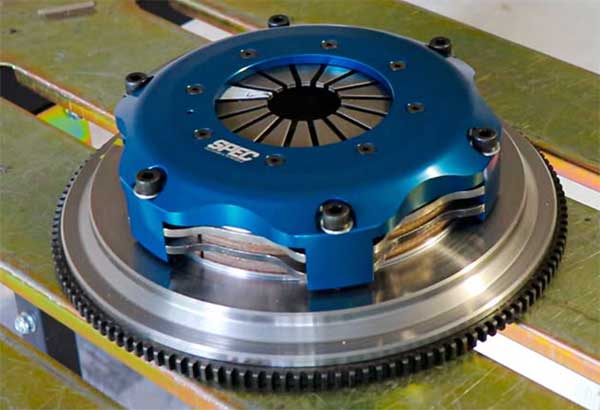
📍 Spec Clutch

  • What they offer: Stage 1–5 clutch kits, along with single mass stainless steel and aluminum flywheels

  • Why it matters: The stock clutch isn’t happy above 220 WHP. Get one of their stainless steel flywheels paired with the clutch stage that fits your goals. **Avoid the aluminum flywheel** if you’re pushing 300+ HP—they’re known to shear flywheel bolts. Ask me how I know… 😏

  • Website: specclutch.com

Custom Dual Clutch Spec Made for my 1.8L Turbo Cruze Project

🔌 Tuning, Sensors, & ECUs

📍 FuelTech / Haltech / MaxxECU

  • What they offer: Standalone ECUs with full CANBUS integration, boost control, flex-fuel support, and advanced tuning options

  • Why it matters: Perfect for full builds, especially when factory ECUs become limiting or you want total control over spark, fuel, and boost

  • Website: fueltech.net, haltech.com, maxxecu.com

📍 HP Tuners

  • What they offer: Factory ECU tuning for supported GM platforms, including many Cruze/Sonic 1.8L (2H0)

  • Limitations: Less support for non-US Opel variants, especially the A18XER. Some ECUs may require unlocking or custom definition files

  • Website: hptuners.com

🔩 ARP Head Stud Upgrade (SRT-4 Conversion — PN: ARP 141-4204)

If you’re pushing serious boost through your Ecotec and want rock-solid head sealing, the stock M9 torque-to-yield bolts aren’t going to cut it. The solution? A tried-and-tested ARP head stud conversion using parts from the Dodge SRT-4 Neon.

What Works:

  • ARP Part Number: 141-4204 (SRT-4 head stud kit)
  • Material: ARP 8740 chrome moly steel studs
  • Stud Size: M10 x 1.5 (requires machining)

⚠️ What You NEED to Know:

  • The stock Ecotec block is M9. To use these studs, you must drill and tap all 10 head bolt holes in the engine block to M10 x 1.5.

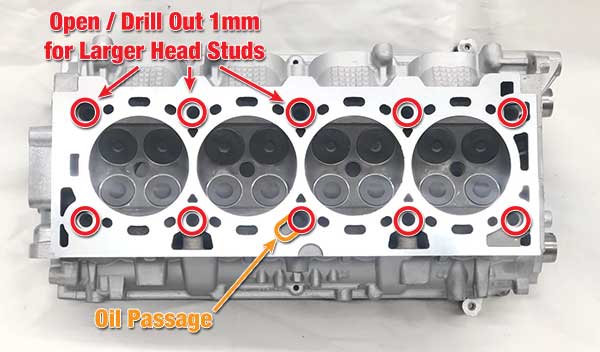
  • You also must enlarge the cylinder head bolt holes by 1mm to accommodate the larger studs.

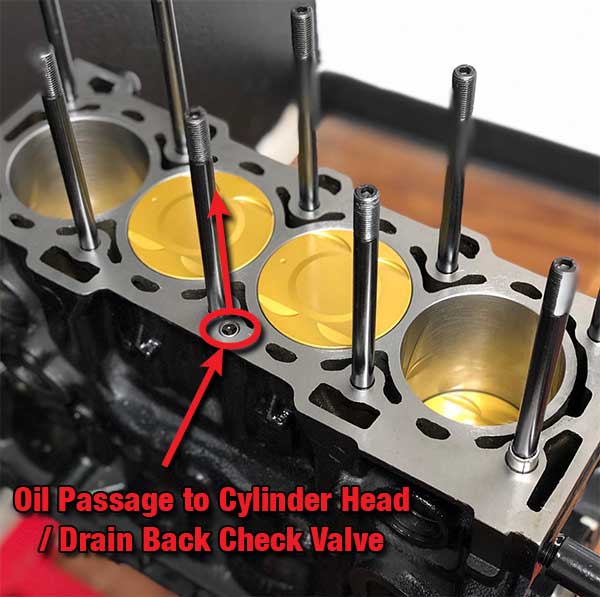
  • One of the head studs—located in the center exhaust area of the cylinder head—also serves as a vital oil passage. If not widened and cleaned properly, it can block oil flow and lead to top-end failure.

  • The SRT-4 kit only includes 8 usable studs. You’ll either need to buy two kits, or contact ARP to custom order a full set of 10.
ARP SRT-4 Head Studs in 1.8L Cruze / Sonic Ecotec Block. Oil Passage to Cylinder Head.
Chevy Cruze / Sonic 1.8L. Drill These Areas 1mm Larger for ARP Dodge Neon SRT-4 Head Studs.

🧠 Pro Tip:

If you’re not comfortable drilling and tapping your block and head with absolute precision, take it to a qualified machine shop. Use a torque plate during machining for proper alignment, and always chase threads before final install.

⚠️ Quick Tip:

Many aftermarket parts are listed under 1.6L turbo platforms (Z16LET, A16LET, A18XER), but are compatible with the 1.8L once you know what swaps over. If you’re unsure, check measurements—or hit me up before you buy.

1.8L Ecotec Engine Specs (F18D4 / A18XER / 2H0)

🧱 1.8L Ecotec Stock Engine Specs (F18D4 / A18XER / 2H0)

  • Displacement: 1796 cc (1.8L)
  • Engine Codes: F18D4, A18XER, 2H0
  • Block Material: Gray cast iron
  • Cylinder Head Material: Aluminum
  • Deck Type: Semi-closed deck
  • Bore x Stroke: 80.5 mm × 88.2 mm
  • Rod Length: ~130 mm (varies slightly between variants)
  • Rod/Stroke Ratio: ~1.47
  • Wrist Pin Diameter: 19 mm (press fit)
  • Compression Ratio: 10.5:1 (NA variants)
  • Main Journal Diameter: 52 mm
  • Rod Journal Diameter: 47.5 mm
  • Valvetrain: DOHC, 4 valves per cylinder
  • Camshaft Type: Flat tappet, direct-acting bucket (no rockers)
  • Timing System: Timing belt (non-interference when belt is intact)
  • VVT: A18XER has Dual VVT; F18D4 and 2H0 typically static or single-VVT
  • Oil Squirters: Yes (underside piston cooling jets)
  • Redline (Factory): 6,500 RPM (soft limiter)

💥 1.8L Ecotec Power Limits (Stock Internals)

While the 1.8L Ecotec was never designed to be a race engine, it’s got enough strength in the bottom end to surprise you. With proper tuning, fueling, and a smart turbo setup, this engine can comfortably push up to 250 WHP on stock internals.

Here’s a breakdown of what the factory parts can realistically handle:

  • Maximum WHP (Stock Long Block): ~250 WHP (safely)
  • Max Boost on Stock Pistons: ~6–8 PSI (anything higher risks ringland failure)
  • Rod Limit: ~250 WHP / 7,000 RPM (stock rods are forged but not designed for repeated high-RPM abuse)
  • Piston Weak Point: Ringlands are the #1 failure point when boosting too aggressively or running lean
  • Head Gasket / Fasteners: Safe to ~250 WHP with OEM bolts; above that, upgrade to ARP studs and a Cometic or MLS gasket
  • Valvetrain: Stable up to ~7,200 RPM if well maintained — but float risk increases above that without stiffer springs

1.6L Ecotec Engine Specs (Z16LET / A16LET / A16XER)

🧱 1.6L Ecotec Stock Engine Specs (Z16LET / A16LET / A16XER)

Displacement: 1598 cc (1.6L)
Engine Codes: Z16LET, A16LET, A16XER
Block Material: Gray cast iron
Cylinder Head Material: Aluminum
Deck Type: Semi-closed deck
Bore x Stroke: 79.0 mm × 81.5 mm
Rod Length: ~129 mm
Rod/Stroke Ratio: ~1.58
Wrist Pin Diameter: 19 mm (press fit or floating, depending on variant)
Compression Ratio:
– NA (A16XER): 10.8:1
– Turbo (Z16LET / A16LET): 8.8:1 – 9.5:1
Main Journal Diameter: 52 mm
Rod Journal Diameter: 47.5 mm
Valvetrain: DOHC, 4 valves per cylinder
Camshaft Type: Flat tappet, direct-acting bucket
Timing System: Timing belt (non-interference unless cam timing is lost under boost)
VVT: A16XER has Dual VVT; LET variants usually single-VVT
Oil Squirters: Yes
Redline (Factory): 6,500–6,800 RPM depending on ECU and model

💥 1.6L Ecotec Power Limits (Stock Internals)

The 1.6L Ecotec is a favorite in the Opel/Vauxhall tuner world—and for good reason. While smaller in displacement than the 1.8, it was offered turbocharged from the factory (Z16LET/A16LET), which means it came with stronger pistons, oil cooling, and boost-ready components.

Here’s what you can expect before you’re playing with fire:

Maximum WHP (Stock Long Block):
Turbo models: ~270–300 WHP
NA models: ~200 WHP with cams + compression
Max Boost (Turbo variants): 12–15 PSI safely on factory internals
Rod Limit: ~7,000 RPM reliably; rods are forged on some LET variants, cast on others
Piston Weak Point: Turbo pistons are tougher than the 1.8, but still limited by ringland design above 300 WHP
Head Gasket / Fasteners:
– OEM bolts are good to ~275 WHP
– ARP studs + MLS gasket recommended above that
Valvetrain:
– Stable up to 7,200 RPM with fresh components
– Upgraded springs suggested for big cams or boost pressure spikes

1.6L & 1.8L Ecotec Power Matrix

Power Level Engine Internals Cams Fuel System Turbo / NA ECU Transmission Fuel Type Notes
< 200 WHP (NA Build) Stock Stock or mild regrind Stock injectors NA only — header + intake Stock ECU (HPTuners OK) M32 / Auto 91+ Octane Solid daily setup. Great reliability. Won’t win races, but won't break your wallet.
200–250 WHP (Stock Safe Zone) Stock Stock Bosch 550cc+
Fuel pump upgrade suggested
T25 / GT2860 / Small T3-T4 Stock ECU + HPTuners
or Microsquirt
M32 (ok short term)
F40 recommended
93 Octane or E30-E50 Keep it conservative on timing & boost. This is the fun/daily sweet spot.
250–350 WHP (Max Stock Block) Stock bottom end
(ring lands at risk)
Piper Cams optional 1000cc+ injectors
Inline pump preferred
GT3076 / VS 6262 Standalone (FuelTech, Haltech, etc.) M32 w/ LSD or F40 E85 preferred ARP studs, MLS gasket, great tune = survive. Any detonation = goodbye pistons.
350–500 WHP (Forged Build) Forged rods + pistons
Stock crank OK
Piper Cams
Springs/retainers
1500cc+ injectors
Return-style setup
S257 / S366 / VS 6766 Standalone race ECU F40 or M32 w/ LSD E85 full-time Rings & sleeves hold. Monitor oiling. Add windage tray & crankcase venting.
500+ WHP (Full Send) Forged internals
Sleeves recommended
Ultimate Road Grind Piper Cams 2200cc+ injectors
Meth optional
VS 80/82 or bigger
Custom fab required
Race ECU only
No factory ECU here
M32 w/ LSD / F40 / AWD E85 full-time/ Methanol This is "Pro" level territory. Build it like a race engine or don’t build it at all.

🔧 Torque Specs: Your Build, Tightened to Spec

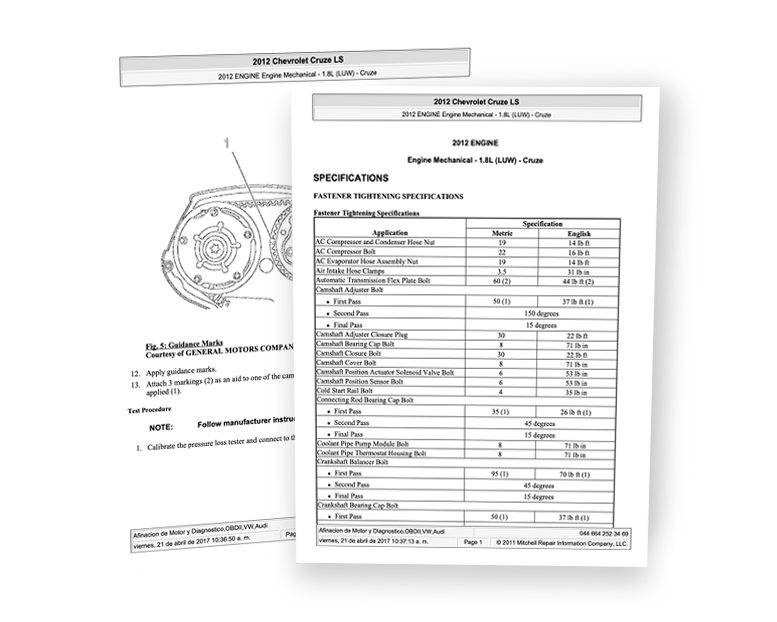
1.8L & 1.6L Ecotec Mechanical Torque Specs Engine
1.6L Opel Ecotec Factory Turbo Engine

Want your engine to hold together like a grudge at a family reunion? Torque specs matter. Here’s what you’ll need to assemble your 1.8L or 1.6L Ecotec with confidence.

📌 You can view or download the full torque specification chart as a pdf, or download it or for easy viewing on mobile.

❓ Missing Something?
Let’s Make This Better Together

Did I miss a part number? Got a swap that worked for you?
Have questions or want something added to this guide?

💬 Shoot me an email — I’ll do my best to keep this guide evolving with real-world feedback from builders like you.

Let’s make this the most complete 1.8L / 1.6L Ecotec resource online. 🛠️

Let’s Talk Power Parts

Custom Intakes & Manifolds

If you’re chasing real horsepower gains, the factory intake and exhaust manifolds are holding you back.

This is where custom fabrication shines. Whether you’re building your own or buying prefabbed kits, upgrading the intake and turbo manifold is a must.

And guess what? That’s exactly what I offer.

👉 Check out my CNC intake manifold flanges, turbo exhaust flanges, and complete seat bracket kits — all designed, tested, and built to push the Ecotec 1.8 to its full potential.

These are the same components I used on my personal 525 WHP Chevy Cruze.

They fit.
They flow.
They win.

🏁 Wrap-Up: Now You’ve Got the Blueprint

If you’ve made it this far, you’re not just a dreamer — you’re a builder.

This guide gave you the specs, the swaps, the power limits, the pitfalls… and the parts that’ll get you to the finish line faster.

Whether you’re piecing together a reliable daily with a kick, or going full-send on a 500+ WHP drag build — the 1.8 Ecotec is a sleeper platform with real potential.

✅ Save this guide.
✅ Share it with your build group.
✅ And when you’re ready to step up, grab the proven parts that make it happen — right here.

Let’s turn wrenches and break necks.

📬 Email Sign-Up

Get Updates, Releases
& Shop Drops First

When I started building my 1.8L Ecotec-powered Cruze, there weren’t any real performance parts on the market—so I made them.

Now they’re available to fellow builders looking for power, reliability, and the exact parts that helped me push 525 WHP reliably on the street and strip.

    Shopping Cart
    Scroll to Top